I spend a down day in Huancayo, going out only to consume and stock up on food, then return to my relatively nice hotel room to eat it until I fall asleep, wake up, then repeat. It is glorious.
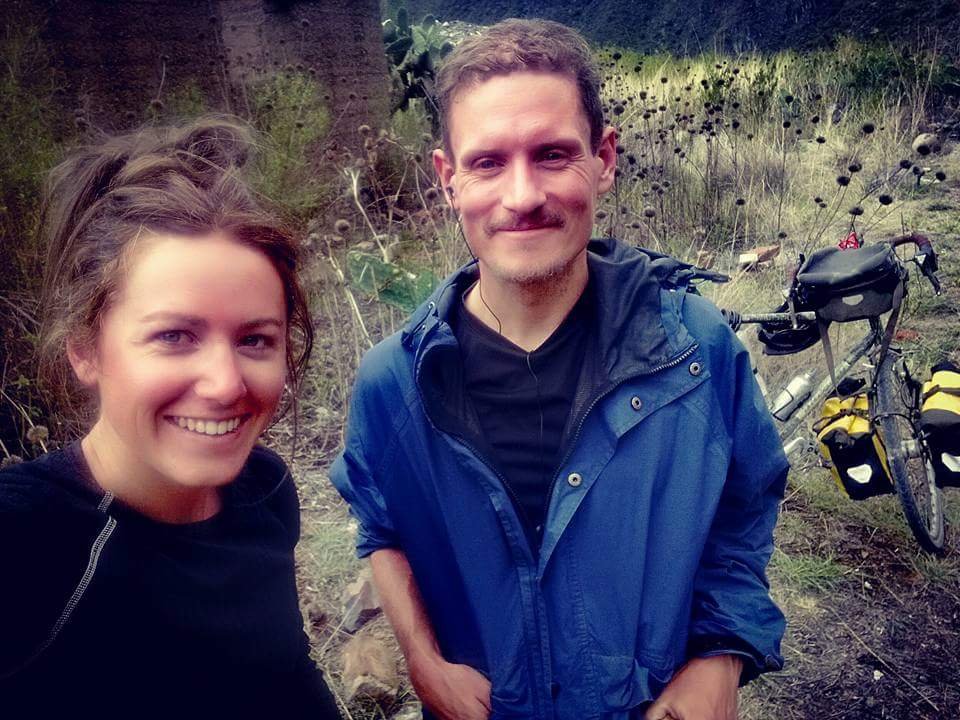
A lot of the people we encounter the next several days ask if we are a couple, and I’m guessing you, dear reader, may be curious along the same lines. Anticipating that Diane might herself wonder if I have any such schemes in mind, I work into conversation on our first food break that I am a) spoken for back home, b) missing that person quite a bit and c) old enough to be her (Diane’s) father, thereby eliminating any speculation that I might be a potential prospect/suitor.
With that out of the way, we cycle until about 4 in the afternoon and then decide to scout out a camp site. We find one right off the secondary highway we’d been on most of the day, with a nice little creek running through a grassy meadow, with just enough flat to set up our tents.
Diane has a camp stove, but it’s one that uses disposable fuel canisters, which are hard to come by in the region. In previous travels, I’ve been cooked for, at least a couple dozen times, by cycle mates. I’ve started cooking for myself on this trip. I dare say I’ve been getting pretty good at it, and am happy to have someone else to cook for. I make garlic mac and cheese for dinner and pancakes and eggs for breakfast. Diane, who speaks Spanish fluently, fields a friendly inquiry from the owner of the property who comes by in the morning to drop off some horses for grazing. After chatting, he tells Diane that we’re quite welcome to have camped on his land. Diane and I are a good team.
The cycling the next day starts with a long, warm, sunny, descent, followed by a equally long climb. Our climbs are for me an exercise in patience and pacing. As we’d figure out in a couple of days when we would spot and employ a roadside agricultural scale, my loaded bike is about 20 pounds lighter than Diane’s, while me plus bike are about 20 pounds heavier than Diane plus hers, so basically I have a substantially bigger engine to payload ratio. In contrast to the week before, when I was doing real distance on my bike for the first time in months, somewhat undernourished and overexerted, this week I’m back in distance-cycling shape, over-nourished and under-exerted.
Diane is ready to call it a day mid-afternoon, and we scout out a camp site behind some relatively modern residential ruins, on the edge of a ravine. We cook some dinner and then call it an early night.
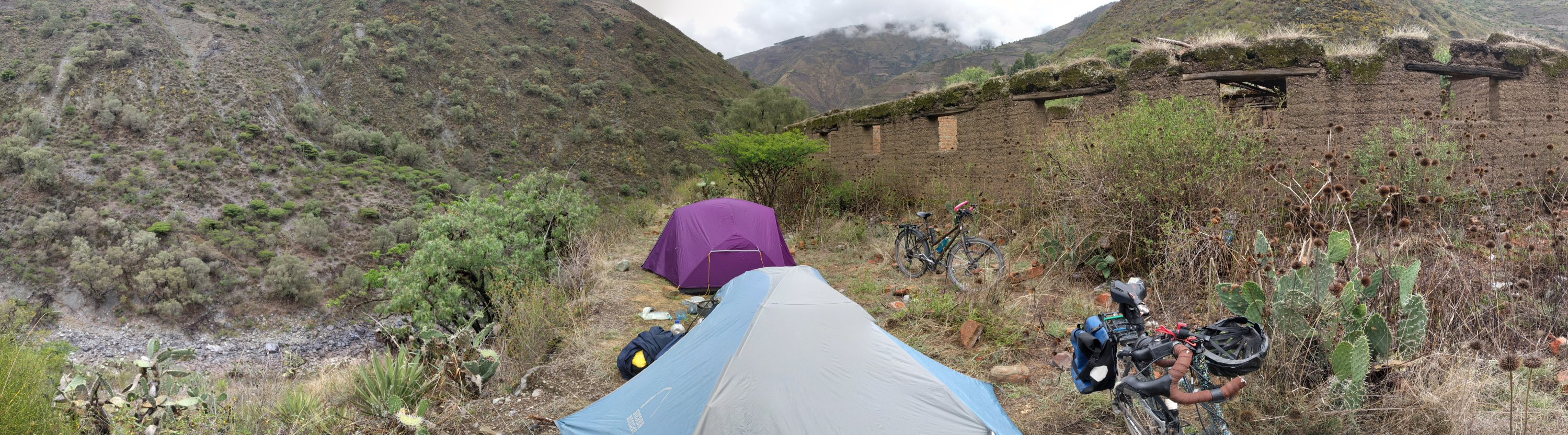
It starts raining at about 3am and doesn’t let up until about 11am the next day. I make coffee and pancakes despite the rain at about 8, then retreat back to my tent to dry off and warm up. Once the rain stops, I make some lentil soup/stew for lunch. There’s plenty of leftovers. We pack up camp.

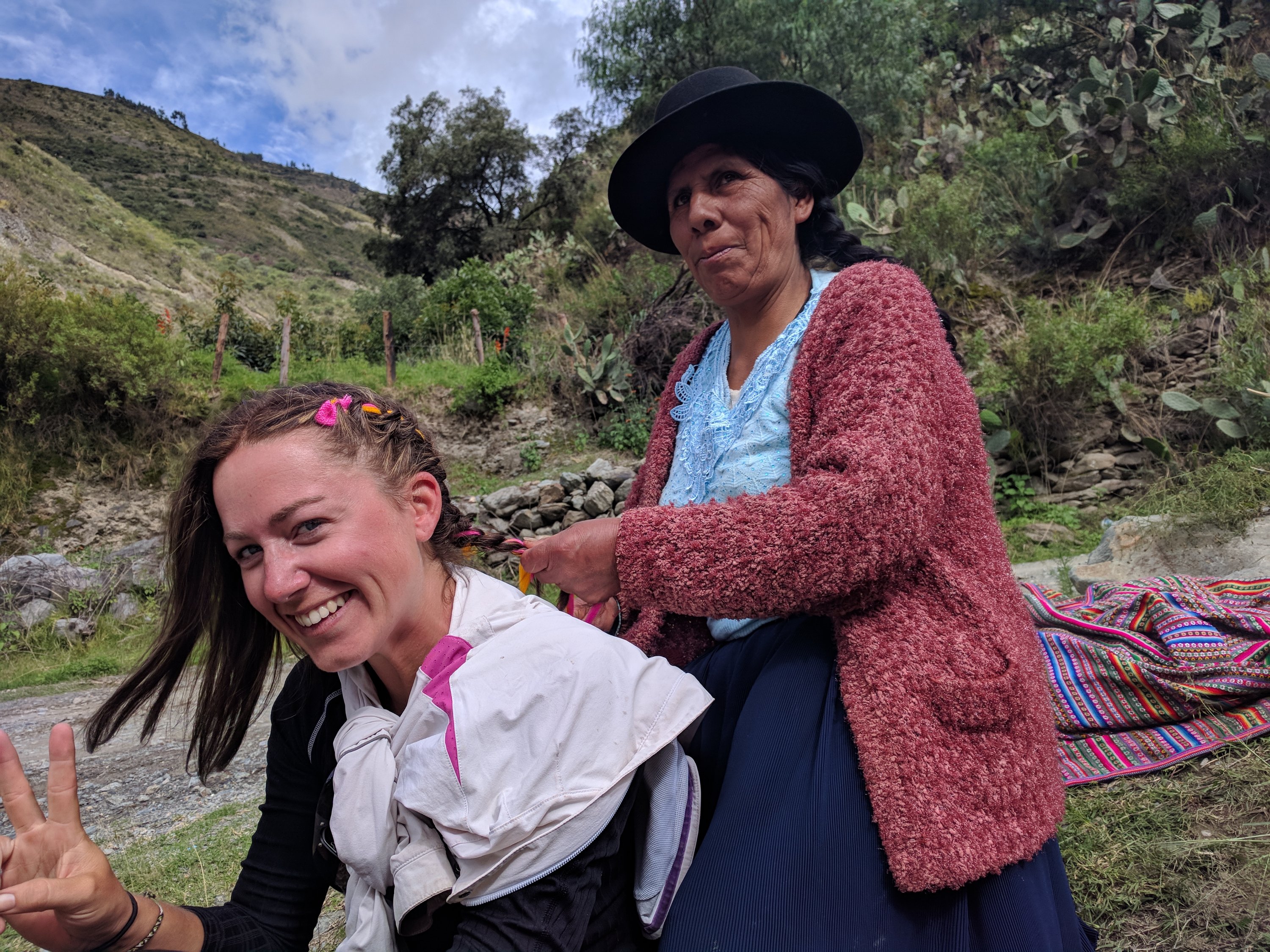
At our first pass of the day, we stop and chat with an indigenous couple who are hanging out roadside. As usual, Diane does most of the talking for us, since she’s fluent. But I feel included in the conversation, and am happy to report that I get the biggest laugh out of the couple when I explain that I’m dumping the unfiltered water that I got from a tap in a town we’ve passed through and that I’ve just sampled after filtering a bit, because it tastes soapy and (pantomiming) I don’t want to be blasting out my ass. Diane takes the prize for overall coolest interaction by producing some hair weaves that were given to her sometime before we met, and asking the wife to weave them into braids in hair, which she seems delighted to oblige.
We bid the couple farewell and then cycle until we’re just about out of daylight, and then contemplate cycling in dusk to the next town and our goal destination for the day, or taking a path down to the rocky river bed along which our road runs parallel. Neither one of us wants to make the decision, so we flip a coin which dictates choosing the latter. The river is fairly shallow and there are a string of rocks to allow crossing it by foot. I mention a couple of times to Diane that it’s probably all around best to be undetected by the locals, minimizing use of flashlights and such, but I don’t seem to get the message across and don’t want to go so far as to request that she not use her headlamp as she chooses. While I spend the last 20 minutes of natural light setting up my tent, she’s on her phone, having just gotten signal for the first time in days. She uses a pretty powerful headlamp to set up her tent in the dark, sometimes inadvertently pointing it across the river while she takes breaks to correspond on her phone. I reheat leftovers and watch lights on the far side of the river, trying to determine if they belonged to people coming towards us. The main thing I’m trying to avoid is drunk partiers seeing us and deciding to come over and engage. In a moment of cynical rationalizing, I figure if she isn’t concerned, then I needn’t be. With her Spanish so much better than mine, and with her being a woman, she would be the one that would (have to) interact (more) with would-be visitors. I’d just be there to be “the guy” whose presence would probably be enough to keep things civil.
Diane had previously mentioned that she doesn’t camp when she’s alone, and she’s never slept well when camping, regardless of having camp-mates. This is all completely understandable. Our planet is not unlike a prison where a woman without the company of a man is an inmate who isn’t under the protection of an established prison-gang member, and is therefore routinely subjected to harassment, and not uncommonly, much worse.
It doesn’t make me feel good to play the role of protector in this prison planet. In the case of language gaps leading to understanding gaps, such as this, it makes me wonder if my company is appreciated beyond the protection inherent in it. Or at least it does for the few moments until I realize that it doesn’t really matter one way or the other, once I decide/realize it doesn’t really matter one way or the other.
I leave my river-side tent door open as I drift off, watching the lights on the other side of the river. I slip in and out of sleep, the latter due mostly to distant dog barks, and at one point I’m pretty sure a flashlight is bobbing across the rocks on the river. I call this out to Diane who, I can see through the walls of our tents, is using her phone and/or headlamp. She acknowledges this, but leaves her light on. I watch the light bob about for a bit, not making progress towards us as obviously as I initially thought, then fall asleep for another 10-60 minutes, I can’t tell. I’m woken up by loud and near barks, but there’s no lights in our vicinity. I shout at the dogs to shut up, and to my surprise, this seems to work, and I fall back asleep.
The next morning, Diane tells me that she slept especially poorly, finding and clutching her pepper spray in reaction to my giving her the update that I had. I apologize for not giving a follow-up, explaining that I wasn’t sure how long I had been asleep when I realized there weren’t any lights coming towards us, as I didn’t want to wake her. I don’t mention that her tent was equally well positioned to monitor the situation, while wondering how insensitive it is of me to have considered saying as much.
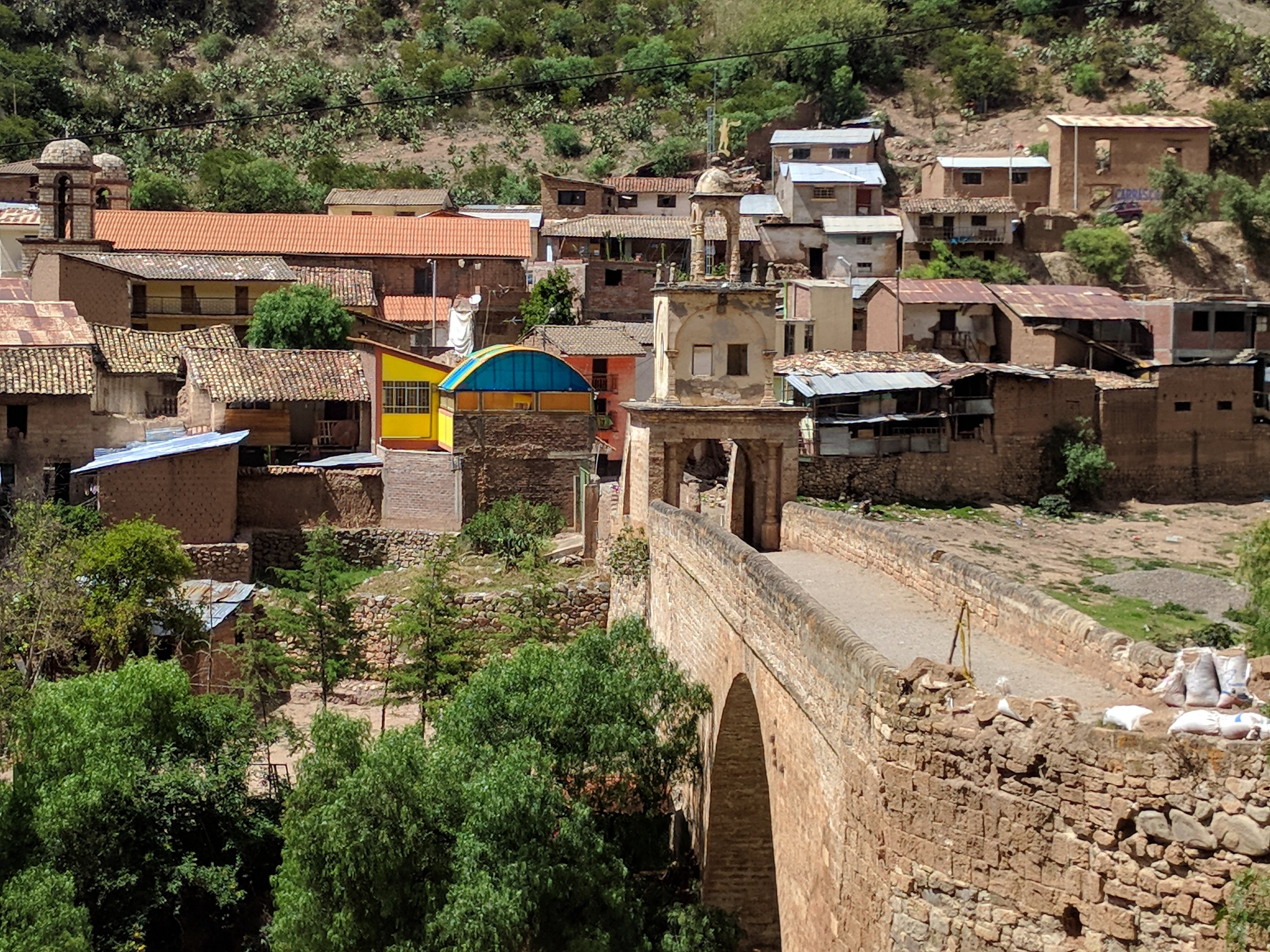
We ride into the town we hadn’t quite made it to the day before, and realize that none of the hospedajes or hostals look particularly welcoming (or open for business, for that matter), so it was just as well that the coin flip had gone the way it did. We order a breakfast of eggs at one of the two restaurants in town, and have to explain several times that we don’t want rice with them. Nonetheless, I get a pile of cold rice under my fried eggs. Even so, the entire bill comes to less than $3. We stock up on ready-to-eat foods (bread, bananas, cookies, jam, and the like), and set out. We have about 110km to Ayacucho, where Diane is going to catch a bus to Cusco.
I’m flip-flopping on whether or not to catch a bus as well. For a variety of reasons, Seattle/home is beckoning, and I’ve decided to end my trip a bit earlier than I had initially thought I would, and I have a flight home from La Paz, Bolivia booked for Jan 17. Including the couple day buffer that I need to find a bike box, break down and pack my bike, and then find a way to get the whole mess to the airport, I have a little over 4 weeks to cover 1200km to La Paz. Usually, I can average about 100km per day, which would mean I have more than enough time to get there. But in the mountains, pushing my bike over passes at 15,000’+, I’ve been averaging more like 40km per day. On the other hand, for the last few days, I’ve been averaging 55+km per day, and the days have been short, either starting late or stopping early, relatively speaking. Back to the first hand, there’s a lot of excursions to take around Cusco, including making my way to the obligatory spectacle of Machu Piccu, and I don’t want to have to rush my way through that part of Peru.
We’ve dropped down to about 2000 meters elevation, which is still fairly high up by Pacific Northwest standards, but arid lowlands by West Peruvian standards, and the heat of the day is becoming a factor. We start scoping out places to camp at mid-afternoon. There’s a wooden and metal cable suspension bridge across the river, and Diane indulges my inclination to take a detour across it to find a spot for the evening. The secluded little oasis is free of cars, and upon inquiring with a young couple that passes us on foot as we walk our bikes down the unpaved road we learn that there are ample “tranquilo y bonita” places to camp. We find one, and set up camp, and cook.
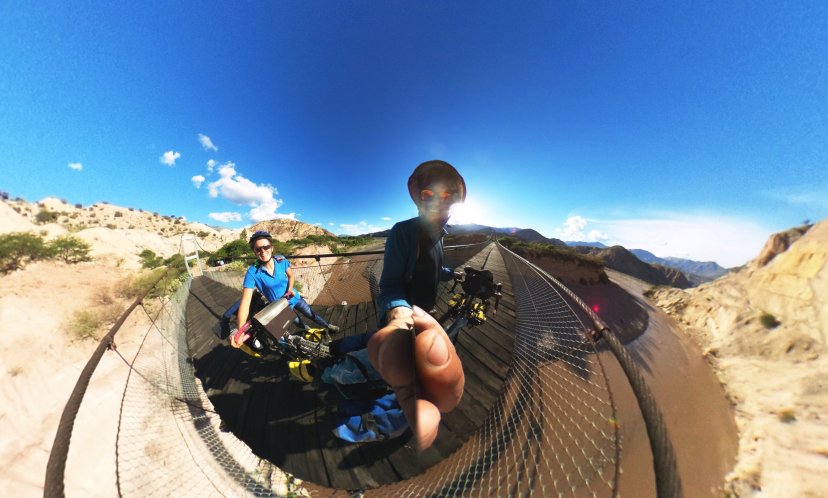
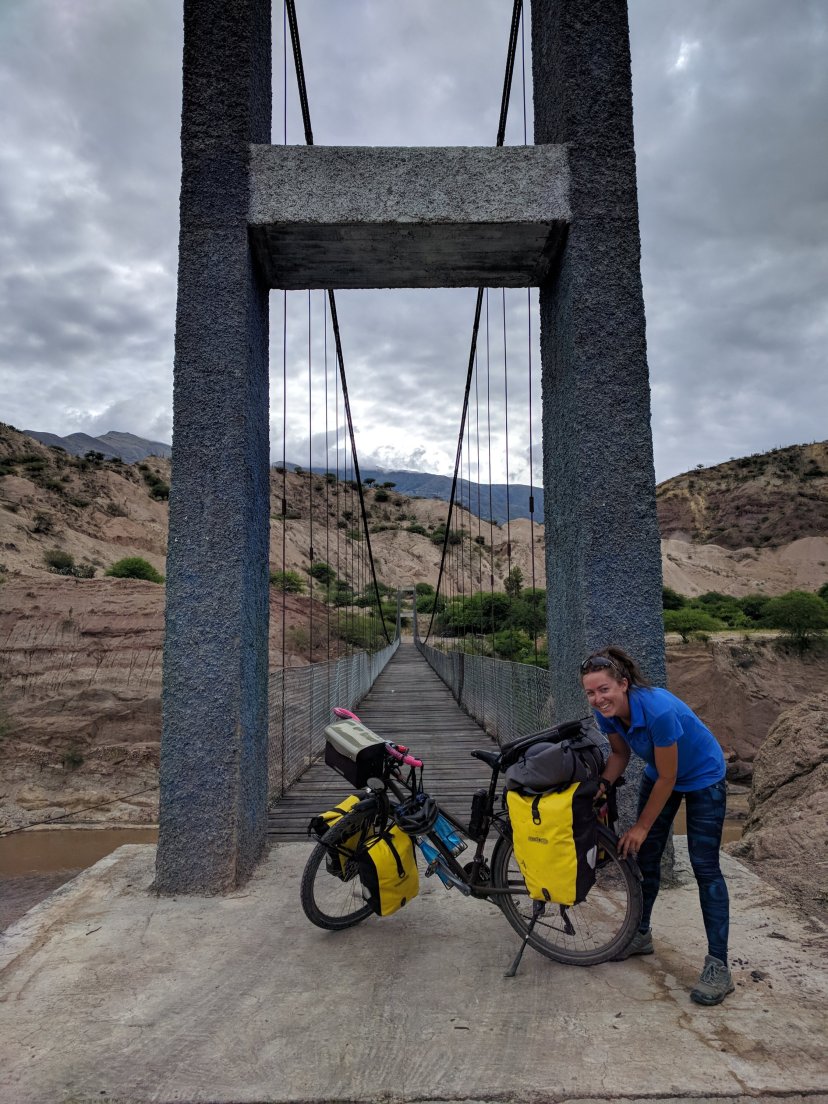
Diane uses bug spray and keeps her arms and legs covered. I borrow some of the spray, but opt to air myself out, wearing shorts and short sleeves. Big mistake. The next day I’m riddled with red spots of bites from an insect that resembled a gnat (noseeums?). I didn’t really feel the bites as they happened, but they itch pretty terribly and cause my ankles to swell up more than I’ve ever before experienced.
We have 65km to go to Ayacucho. It starts with a steady climb, followed by a rapid decent, and concludes with a steep climb onto the plateau on which the city sits. I’ve gotten impatient with slow-pedaling, so I start letting Diane get a 10-ish minute lead on me, pedaling at my natural pace until I catch up, and then repeating. Diane makes fairly frequent stops, and at about 2pm (at the end of the first ascent) we’re about halfway there, and by my estimations, not on track to make it to town on time. Part of this is the fault of mis-leading elevation profiles provided by Maps.me, but upon factoring in the 20km we’ll cover in 30 minutes on the quick descent, my estimations are completely off. We make it to town with ample daylight to spare, and check into a hostal. We each get mild electric shocks from the always sketchy integrated water-heater showerheads, but whereas mine is barely uncold enough to be tolerable, Diane reports hers is “as warm as at home”. We go out for dinner, but not far, as by then there’s a pretty substantial downpour, then retire to our rooms.
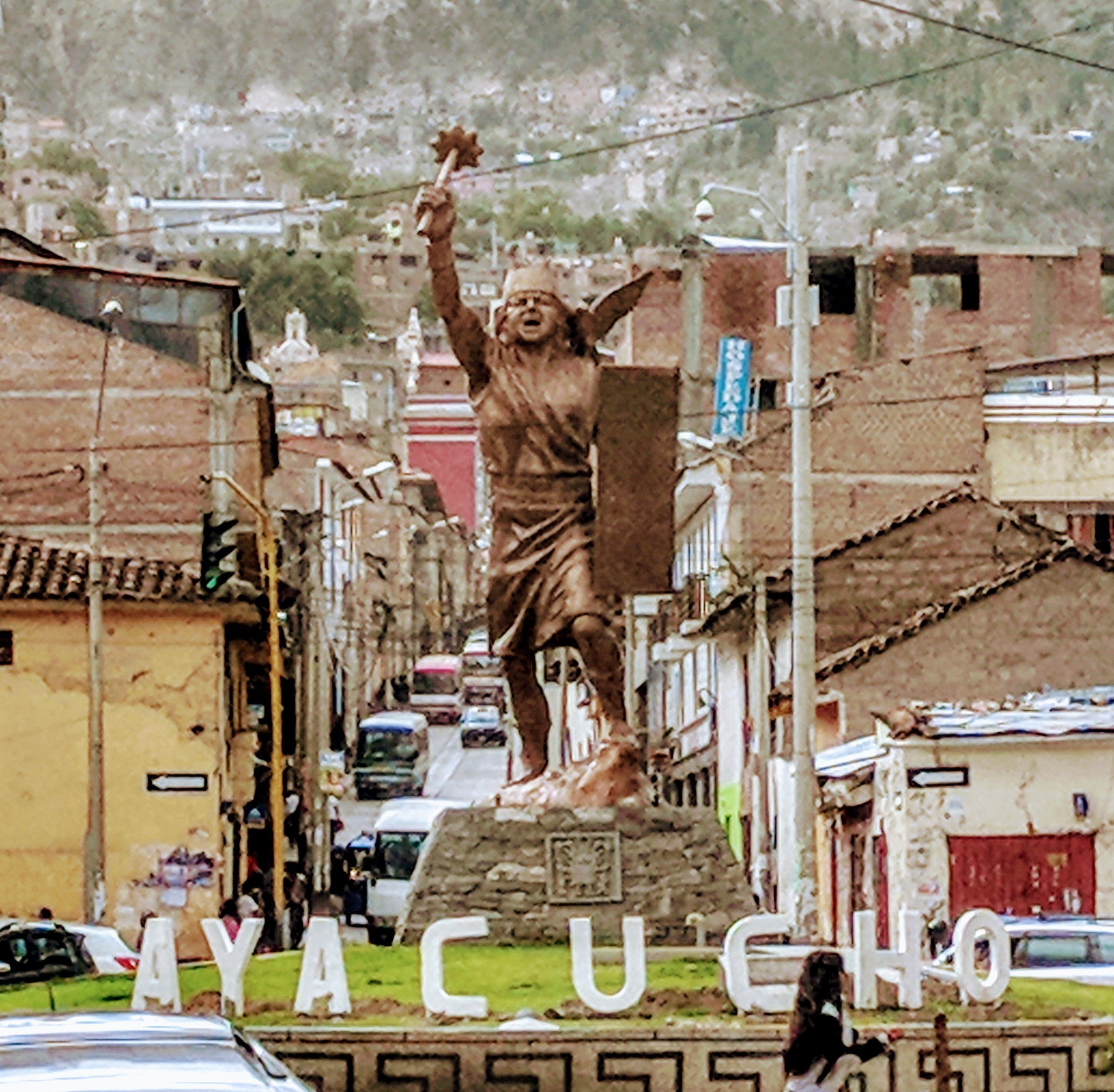
The next morning we head out, have big breakfasts at a fancy restaurant of a fancy hotel in the Plaza de Armas, and then track down the ticket agency for the bus company that we’ve been pointed to by the local tourism bureau. With the internet access afforded by the hostal, I’ve compared the elevation profile of the route to Cusco with that of the elevation profile of the distance we’ve covered in the last 4 days. What lies ahead is about 6000 m of climbing over 600km, much of it at grades approaching 10%, whereas we’ve covered about 2500 m of climbing over about 300 km. In short, the confidence that I’ve accumulated, in my ability to pedal to Cusco in an acceptably short amount of time, is false. It would take me at least a week and a half to get to Cusco, and leave me in the position of having only a couple of days, best case, to spend in the area. So, I opt to take the bus.
Diane makes quick work of navigating the intricacies of buying our tickets, and with that taken care of, we spend the afternoon exploring the city by foot. It’s a vibrant town, virtually free of any other tourists, and full of friendly locals.
At about 3pm, as she and I wrap up our 4th and 5th (resp) snacks of the day, at a nice mid-level restaurant, a low pressure front rolls in, and the winds pick up dramatically. It’s hard to know if this sort of weather front is typical for the area, but the sheets of metal whipping on some roofs, and terra cotta tiles flying off of other roofs, then crashing onto the streets below indicate that it’s likely not. After going to a grocery store to stock up on snacks for the 17 hour bus ride, we briskly return to the hotel where we’ve already checked out, but stored our bags and bikes for the afternoon, collect said bags, assemble them onto the bikes, then set out, walking our bikes, through blustery wind, dense foot traffic, and aggressive vehicle traffic. I’m leading the way using my phone to navigate to the point on the map where we believe the bus terminal is to be found. After 30 minutes of soppy bike pushing to get there, we ask a local where the station is. Diane let’s me initiate this inquiry, and thanks primarily to showing my bus ticket and phone’s map, we learn that we’ve only covered about half the distance to the terminal, which is on the edge of town. Thankfully, as we get further out from the center of town, the foot and vehicle traffic lightens up. The sky grows darker and we grow more water logged as we make the final stretch along a road with a wide, park-like median which is thankfully easy going compared to what we’ve just squeezed ourselves out of.
The bus terminal is huge, with at least a dozen different bus companies running routes to and from Ayacucho to a variety of Peruvian cities. We’re allowed to check our bags, but instructed to hold onto our bikes for another couple of hours, until 8pm, 30 minutes before the bus is scheduled to depart.
When we return to the counter with our bikes, ready to load them, it’s pandemonium. There’s a French couple with bicycles, yelling at the assistant bus operator, who seems to be in charge of loading cargo into the ridiculously tight cargo hold, over the fact that he wants payment of $5 for each bike, but they already paid for transport of the bikes when they boarded the bus earlier in the route (Ayacucho is one of multiple cities through which the bus route runs). A porter rolling an overloaded cart of massive plastic-burlap bags is unable to stop the cart before it runs into Diane’s bike and knocks it over, scratching the leather Brooks saddle. This is the final straw for her, and she berates them, repeating over and over that the saddle costs $100, and that they should take responsibility for the damage they’ve done. The guy doubles down in response saying that we must remove our front wheels in order to have the bikes loaded on the bus. This seems reasonable to me, and I remove my front wheel. I offer to remove Diane’s for her, but she’s protesting that we shouldn’t have to since it’s going to mean we have to re-attach it at our destination, which will be a hassle. Internally, I have to side with the bus operator on this point, but I sympathize with the stress that Diane is under and outwardly remain neutral. The second time I offer to remove the wheel, saying that it’s really not a big deal, she concedes and I do. I have to sort of guess how to decouple her hydraulic caliper brakes, but it ends up being pretty intuitive and easy. The departure of the bus is delayed by about 20 minutes, in part because of Diane’s ongoing protestations, which draws some negative attention from fellow passengers, but I’m just relieved to have the episode behind us, happy to commiserate with other passengers about how awful things seem to be going, and Diane is beyond caring what anybody else thinks.
I share with Diane some of a liter box of wine that I purchased as one of my “snacks”, and lend an ear to her venting frustration as the bus gets underway, which seems to help. A few minutes later, I grow incensed at the German guy sitting in front of me, who has 2 meters of open space in front of his seat, but finds the need to lean his seat back 4 inches, cutting in half my leg room. I make a point of knocking him, hopefully awake, through the seat, about every 30 minutes as I nurse my liter of wine and watch downloaded “Lady Dynamite” episodes on the Netflix app on my phone.
The bus ride, in net, is tortuous. I get maybe an hour of agonizing sleep. The German, possibly having finally received my not-so-passively aggressively delivered signals, pulls his seat forward about 12 hours into the journey, giving me some respite from having to either jam my legs into the seat back, or sit twisted awkwardly.
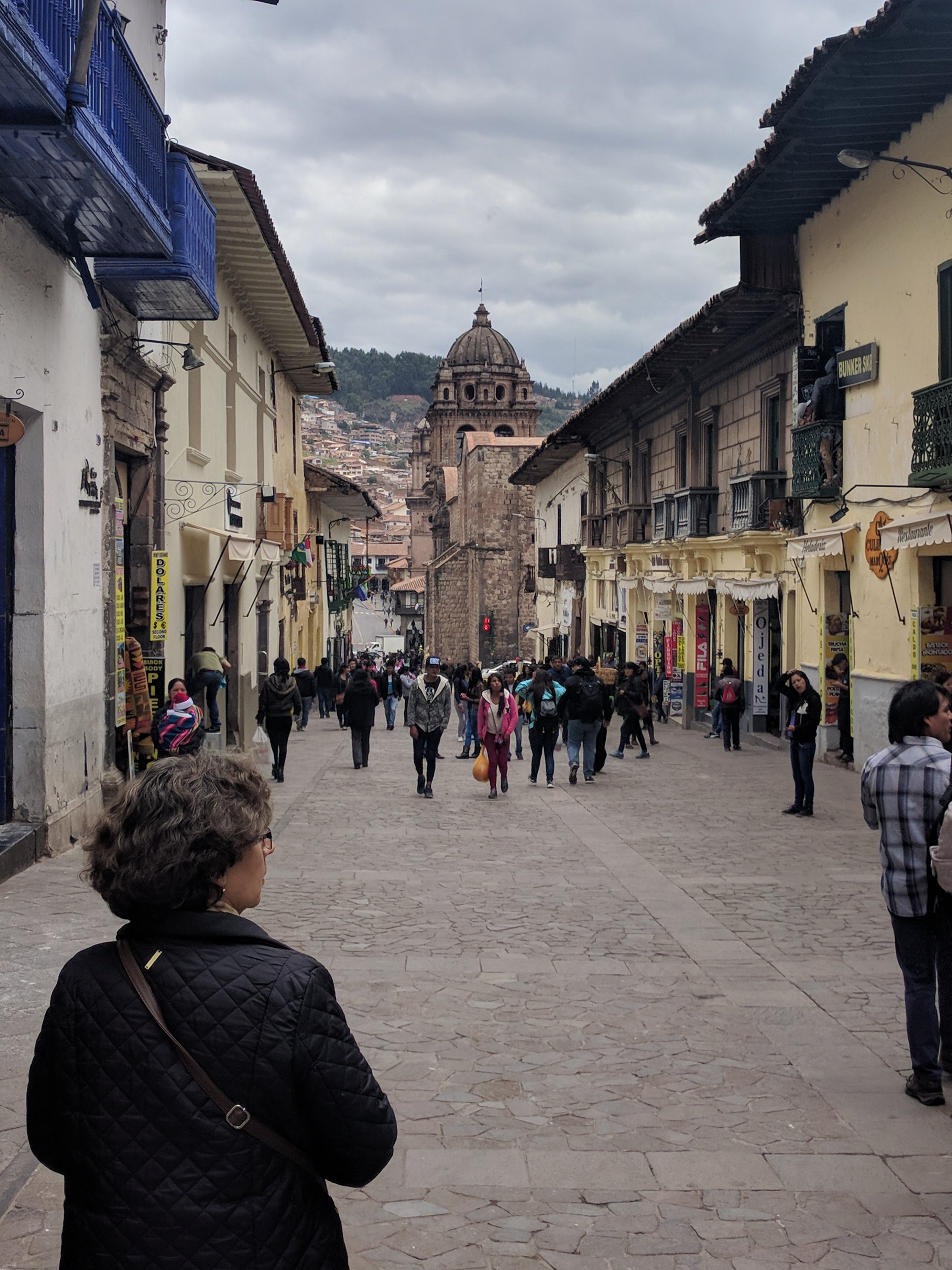
We get to Cusco, reassemble our bikes and reload our bags, and then ride together to the historic district, where I’ve booked a room in a hostel, and Diane has made arrangements with a couchsurfing host. We get to where the routes to our respective destinations diverge and say our farewells.
😀

 Jeremy's Bike Blog
Leave a reply to Sue Cancel reply